
 FREE GIFT ADDED TO ALL ORDERS $95+
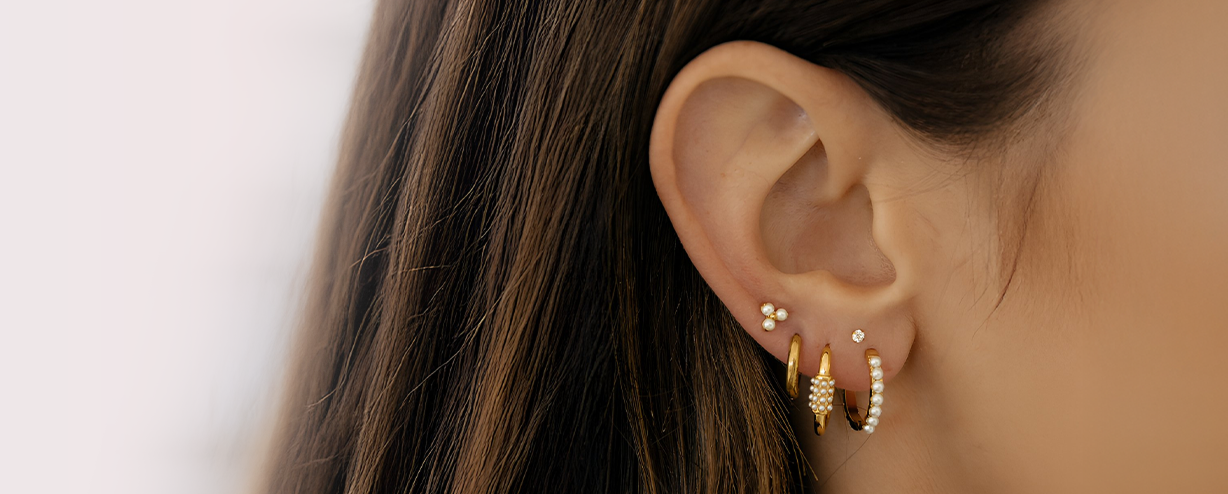


When it comes to piercings, healing time is one of the most common (and misunderstood) topics. Whether you’re getting your very first lobe piercing or building a full ear stack, understanding the real healing timeline is key to avoiding irritation, bumps, and unnecessary complications.
Spoiler: Many piercings take longer to heal than you think — and that’s totally normal. Every body heals differently, and giving your piercing the proper time and care sets you up for long-term comfort.
Why Piercing Healing Takes Time
After a piercing, your body immediately begins repairing the tiny controlled wound. Even though the outside may look healed after a few weeks, the underlying tissue often needs months to fully regenerate.
A few factors influence healing time:
- Blood flow (earlobes heal faster than cartilage)
- Movement + friction from hair, headphones, pillows, kids, etc.
- Your personal healing speed
- Jewelry quality (implant-grade titanium or stainless steel matter!)
- Consistent aftercare
Healing isn’t linear, either. Some weeks feel perfect, and the next week your piercing gets a little cranky. That’s part of the process.
Healing Times by Piercing Type
Here’s a realistic, piercer-approved breakdown of how long each piercing actually takes:
Earlobe Piercings
Healing time: 8–12 weeks
Earlobes get great blood flow, which makes them the fastest and simplest piercings to heal. They often look healed around the six-week mark, but the deeper layers still need the full 12 weeks to strengthen and settle. Ear lobe piercings are the perfect choice for first-time piercers and kiddos.
Cartilage Piercings (Helix, Conch, Tragus, etc.)
Healing time: 6–12 months
Cartilage takes its time, and that's completely normal. Because it has less blood flow and is more prone to irritation from hair, pillows, and movement, these piercings can feel great one month and suddenly flare up the next. Patience is key here!
Nose Piercings (Nostril)
Healing time: 4–6 months
Nostril piercings heal faster than cartilage but still require consistent care. They may feel settled early on, but the tissue needs several months to fully stabilize.
Signs Your Piercing Is Healing Normally
Even when everything is going right, you might still notice:
- Occasional redness
- A little soreness when bumped
- Crusties (normal dried lymph)
- Itchiness (a sign of healing!)
- Minor swelling
These signs don’t mean your piercing is infected! They are just part of the journey.
Signs Your Piercing Needs Attention
Reach out to a professional if you notice:
- Hot, throbbing pain
- Thick yellow/green discharge
- Persistent swelling
- A bump that continues to grow
- Jewelry that suddenly feels too tight
When in doubt, contact a professional piercer or healthcare provider.
How to Support a Smooth, Comfortable Healing Process
Here’s what actually makes the biggest difference:
1. Choose implant-grade titanium jewelry
This matters so much. High-quality materials like ASTM F-136 implant-grade titanium greatly reduce irritation and help your body heal faster and cleaner.
2. Keep your hands off
Touching introduces bacteria and slows healing. Clean it only during your aftercare routine.
3. Clean with saline or Hypochlorous Acid Solution
Gentle is the name of the game. Twice daily is plenty.
4. Avoid sleeping on it
Side sleeping is one of the biggest sources of irritation bumps.
5. Stick with your starter post length
Don’t downsize until your piercer gives the okay — usually 6-8 weeks for cartilage and 8-12 weeks for lobes (Psst...all of our flat backs come with extra post lengths, but if you need other sizes or to purchase additional replacement posts, you can snag some here)! It's best to have a professional downsize your post(s) to avoid traumatizing the piercing channel.
So… When Can I Change My Jewelry?
This depends on the piercing, but here’s the golden rule:
You can change your jewelry only when the inside is healed, not just when the outside looks healed.
General Healing Times:
Lobes: 8–12 weeks
Cartilage: 6-12 months
Nostril: 4-6 months
Switching too early is one of the biggest causes of irritation bumps and delayed healing.
Healing Is a Journey, Not a Race
Every piercing has its own timeline, and your body does incredible work behind the scenes. With the right jewelry, consistent aftercare, and patience, you'll enjoy a smooth healing process.